
where to begin with dario argento
I think the vast majority of movie directors just tell stories. And that’s good, we do need stories. But then, and this is the distinction, there are also directors who conduct them. Dario Argento is the latter. This Roman maestro of supernatural horror and giallo works less like a director and more like a composer who happened to pick up a camera.
Like he was someone for whom narrative was always the most boring thing that was happening on screen. You may have heard his name whispered in the same breath as Kubrick, Hitchcock, or Bava, and have now decided it’s time to find out what all the fuss is about. But, there are some things you need to know before you sit there in the dark.
I have to be honest with some housekeeping at the beginning. Dario Argento is not a moviemaker you go to for plot. If I’m charitable, his stories are vessels; they’re beautiful, occasionally hilariously punctured vessels meant to carry you from one set piece to the next. The logic is that of dreams, with characters making decisions which would get them killed in real life, as they’re not really characters in the most conventional sense. They’re really just colour in a composition. If you accept this early, you will be absolutely fine. If you fight it, you’ll spend around 90 minutes feeling very smug and very bored.
Argento deals in sensation, and the architecture of dread. He renders the grammar of violence so formally and operatically that it crosses that line from exploitation into something approaching art. He is a full-blown maximalist who was working in a medium that usually rewards some restraint. The results are either ridiculous or transcendent, and a lot of times both in the same scene.
So, where should you begin?
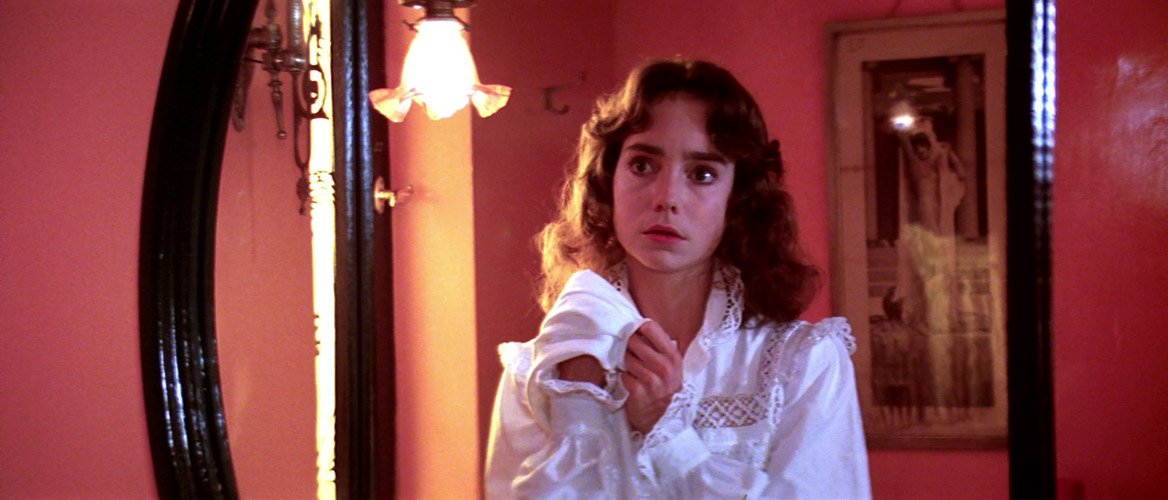
Suspiria (1977)
If you’re going to a new city and want to eat a meal, generally you go to the place everyone talks about. You go there first, and you go there sober paying attention. Suspiria is that meal.
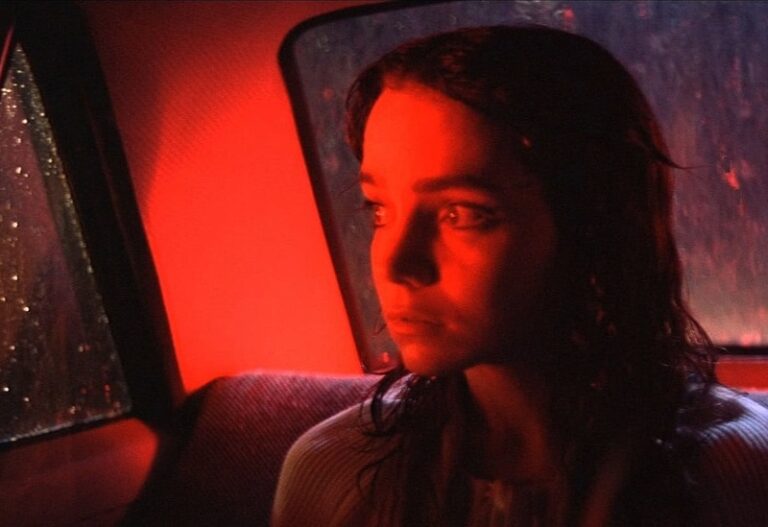
An American ballet student arrives at an elite German dance academy, and almost straightaway begins to suspect that something is deeply wrong. What comes next is less a horror movie but more a sensory assault disguised as one. It’s drenched in a palette that shouldn’t work; primary blues and reds pushed so far into the spectrum they are almost vibrating off the screen, and scored by the prog-rock group Goblin, Argento’s regular collaborators, in a way that doesn’t really feel like music as it does a bug crawling up your neck.
The kills are operatic and the sound design is hallucinatory. The logic is that of a nightmare. But none of that matters because nothing else in horror looks or feels quite like this. I think Suspiria understands something quite basic: that fear isn’t rational, so the language of fear doesn’t have to be rational either. It was filmed in Technicolor on an almost expired process, and used sets built to recall a child’s illustrated fairytale and to this day remains one of the most visually distinctive movies ever made. Full stop.
If you can, watch it on the biggest screen you can find, in the dark and with the volume high enough that the neighbours consider calling the police.
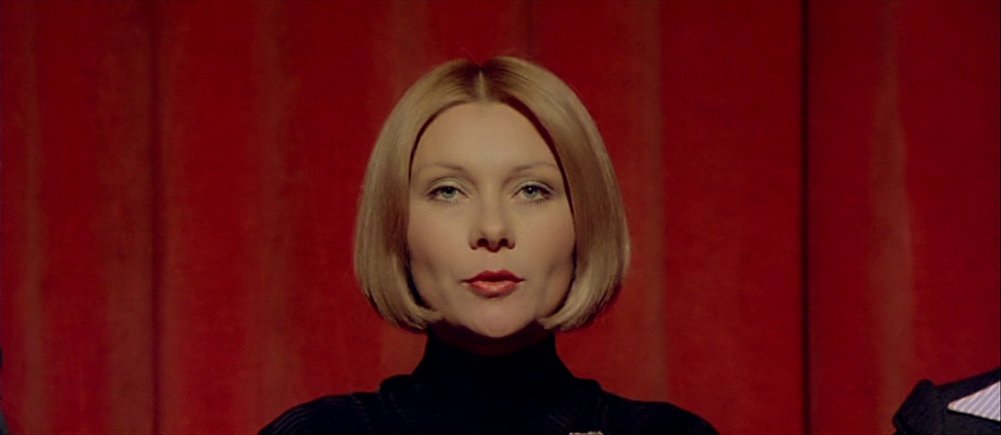
Deep Red (1975)
Once Suspiria has changed your expectations of what a horror movie is allowed to do, go back two years to what can arguably be called his masterpiece.
Deep Red, or Profondo Rosso, sounding like the wine you would order with something you’d regret, works within the giallo tradition, essentially Italian pulp crime fiction which has been transposed onto celluloid: there are beautiful people, mysterious murderers wearing black leather gloves, and death scenes that are choreographed with the sort of care that most directors usually reserve for love scenes. Here, we have an English jazz musician witnessing a murder in Rome who then spends the rest of the movie unravelling a decades-old mystery while the body count continues to rise.
What separates this movie from the usual thriller is Argento’s obsessive attention to the frame. There’s a scene early in the movie, (trust me, you’ll know it when you see it) where our hero is looking for something he’s missed, something hidden in plain sight. Argento clearly shows us what’s wrong in the shot; he plants it in the frame and trusts us to catch it, and almost no-one does. It’s a scene of pure cinematic misdirection that should be talked about in the same conversation as anything Hitchcock ever pulled.
Goblin scored here also, and it’s one of the great horror soundtracks. When it arrives, the violence is precise, brutal, and staged like a dance. David Hemmings, who himself was a veteran of another Italian masterpiece, Michelangelo Antonioni’s Blow-Up, brings a dishevelled, intellectual quality to the movie that grounds it in something approaching reality. And then Argento pulls the rug out from under everyone.
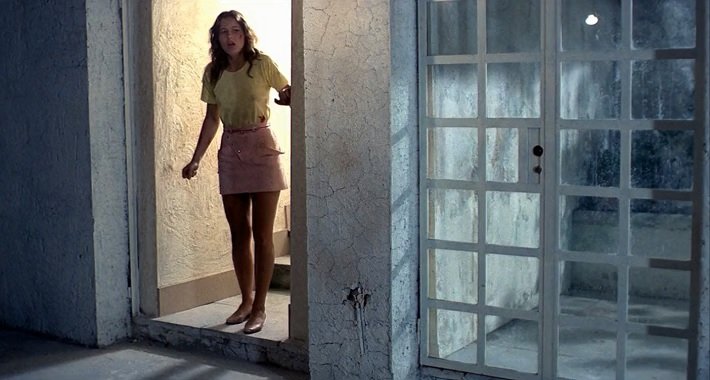
Tenebrae (1982)
By 1982, it seemed as though Argento was interrogating his own reputation. Tenebrea is about a horror author being stalked by a killer who murders people in ways that mirror the authors own fiction. It’s Argento thinking about himself, about the violence his movies enact and the audience which arrives hungry for it, and the result is I think his most intellectually pointed work.
It’s also really nasty in ways which can feel destabilising; and that, of course, is the point. This isn’t a comfortable movie. It’s a movie about the discomfort of watching movies like itself, and that may sound like a graduate thesis but it plays like a razor to the throat.
The cinematography by Luciano Tovoli is white and cold and clinical, deliberately inverting the lurid colour excess of Suspiria. There is a crane shot near the end of the second act which has been written about extensively and deserves every word.
It begins like a formal gesture, then pulls back until we’re seeing the building from outside and above, then just keeps going until it’s doing something cameras weren’t supposed to do. It’s unnecessary and excessive. It’s also absolutely magnificent.
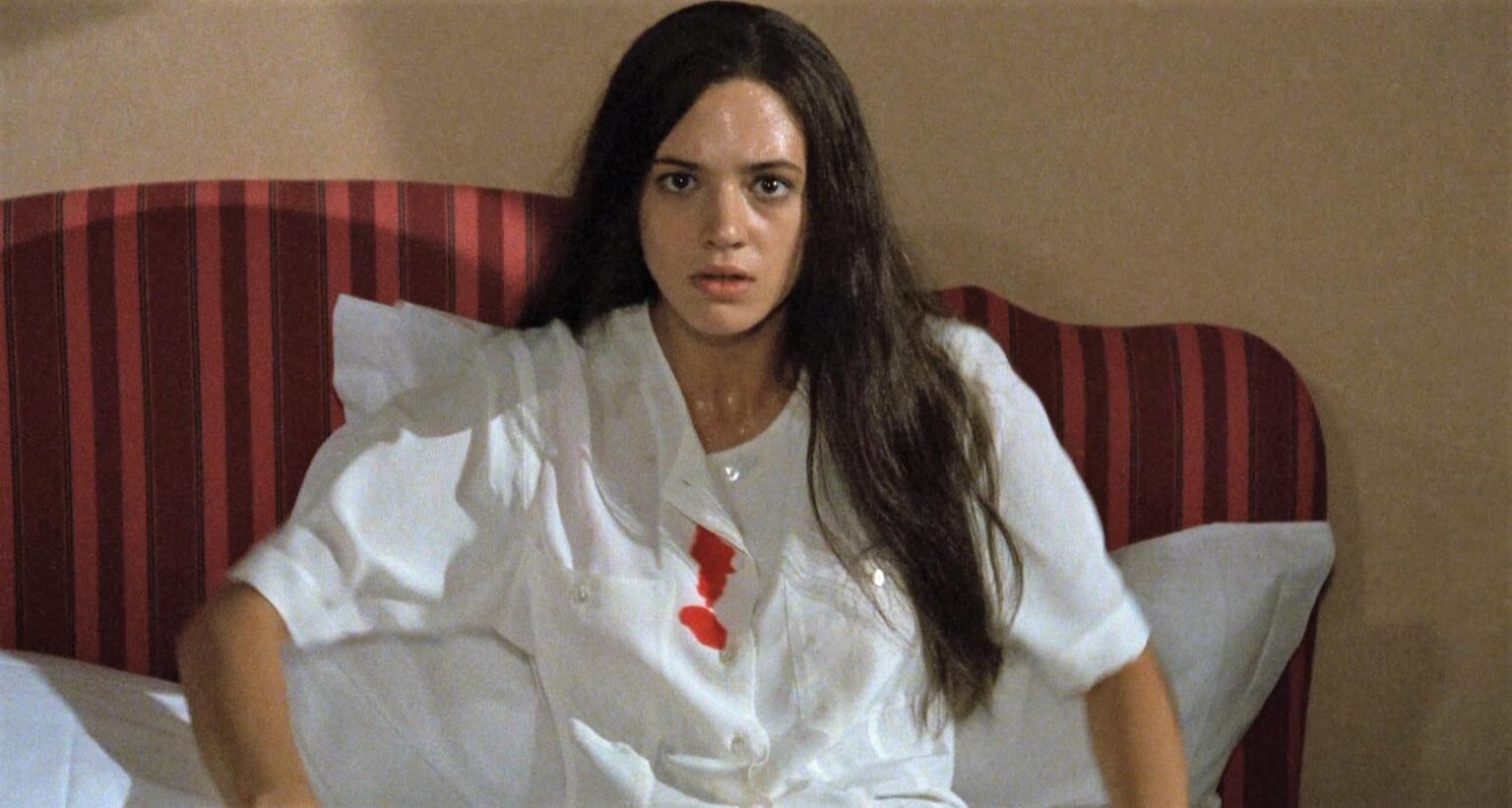
Approaching
Argento the Right Way
Before going in, you should know that Argento’s movies were made in a specific industrial context; the Italian genre movie industry of the 1970s and 80s, and they operated there at the intersection of exploitation, commerce, and sometimes brilliance. They were filmed fast, usually in multiple languages at the same time (the actors would speak different languages in the same scene with dialogue dubbed in post) and with budgets that needed creativity over resources.
In the English-language versions, the dubbing can be jarring. It’s also authentic. It’s how these movies were meant to be experienced by international audiences, and there really is something about the slight dissociation of dubbed dialogue that actually enhances the dreamlike quality Argento is creating.
His later work, from roughly the late 1990s onwards, represents quite a drop in form. Giallo, The Card Player, Dracula 3D; they are movies that exist and may be studied by future scholars as evidence of something. Although exactly what remains unclear. I’d avoid them until you have the context to understand them as decline rather than representative of the whole.
The movies that matter are those from his peak, around 1970 to 87. In that period, Argento made The Bird with the Crystal Plumage, Four Flies on Grey Velvet, Cat o’ Nine Tails, Opera and Phenomena, and these all offer pleasures specific to the form. But standing at the entrance, then Suspiria, Deep Red, and Tenebrae are your first three courses. Eat slowly, and let them settle.
The Uncomfortable Gaze
And a quick last word. People often ask whether Argento’s treatment of violence against women is a problem. This is a fair and legitimate question, and anyone telling you it’s a simple question is selling something.
His movies do fixate on female victims. They linger and aestheticise suffering in ways that demand a reckoning. But they also, and especially in Tenebrae, seem aware of this and seem to be probing the wound instead of just inflicting it.
I don’t mean this as a get-out-of-jail-free card. Discomfort is the correct response. But it’s also, arguably, part of what the work is doing. It makes you uncomfortable in your own spectatorship and implicates the eye that’s watching. Whether Dario Argento earns that reading or just enables it is a question you should sit with. Because sitting with it is much more interesting than either easy answer.
The movies are there waiting. Turn out the lights.

Author
Adam Page is a freelance writer, specialising in film and literature with essays and opinion pieces. He has a particular love for all things horror-related, being published in HorrorFam, FilmEast, MovieMarker among others. He is an Undergraduate, studying English Literature and Language, and enjoys taking movies apart, discovering the themes and techniques used to make cinema the incredible medium it is. If he isn’t writing an essay, he is usually found rewatching a movie, notebook in hand and annoying anyone who is sitting close by. Feel free to follow him on Instagram and BlueSky.
Giallo is a subgenre of horror-thriller films that started in Italy, characterized by its unique blend of murder mysteries, psychological horror, eroticism, and stylized violence….
Analog horror is a fascinating corner of the horror genre. They do not rely on modern special effects or glossy visuals. Instead, they aim lo-fi aesthetic, unsettling, glitchy…
There are directors you admire, who create solid and emotional work. And there are directors who do something to you. Directors who reach into your chest and start…
Cinema as an art form, has the unique ability to challenge societal norms, push the boundaries of storytelling and provoke intense emotions. One of the most striking…
In the 90s, fear was defined by excessive gore, dark settings, and monsters in masks that chased their often-adolescent victims around their white-picket lawns. American cinema…
In the middle of the twentieth century, when American studios dominated and British cinema leaned toward restraint and realism, Hammer Film Productions revived…