
where to start with lucio fulci
He’s not for everyone. And I’m saying that as a promise rather than a warning. The man made movies like a fever dream burns in your mind: with their own internal logic, their very own relationship to causality and time and the human body, with logic you either surrender to or you don’t. Those who don’t will tell you he was nothing more than a hack and a gore merchant. A guy who made Italian schlock for grindhouse theatres which smelled like stale beer and broken dreams. And in this, they aren’t entirely wrong. But they are also missing the point so totally that it’s almost beautiful.
Here’s what Fulci understood, maybe instinctively, and maybe because he had built a career making westerns and comedies and crime movies before he and horror found each other: dread is not rational, and fear doesn’t need to explain itself. The absolute worst thing about the universe isn’t that it wants to hurt you, it’s that it doesn’t care about you at all. Fulci made movies that felt like that; they were indifferent and unfeeling. But gorgeous in the way that something truly terrible can be gorgeous.
So. You’ve decided you want in.
Where do you start?
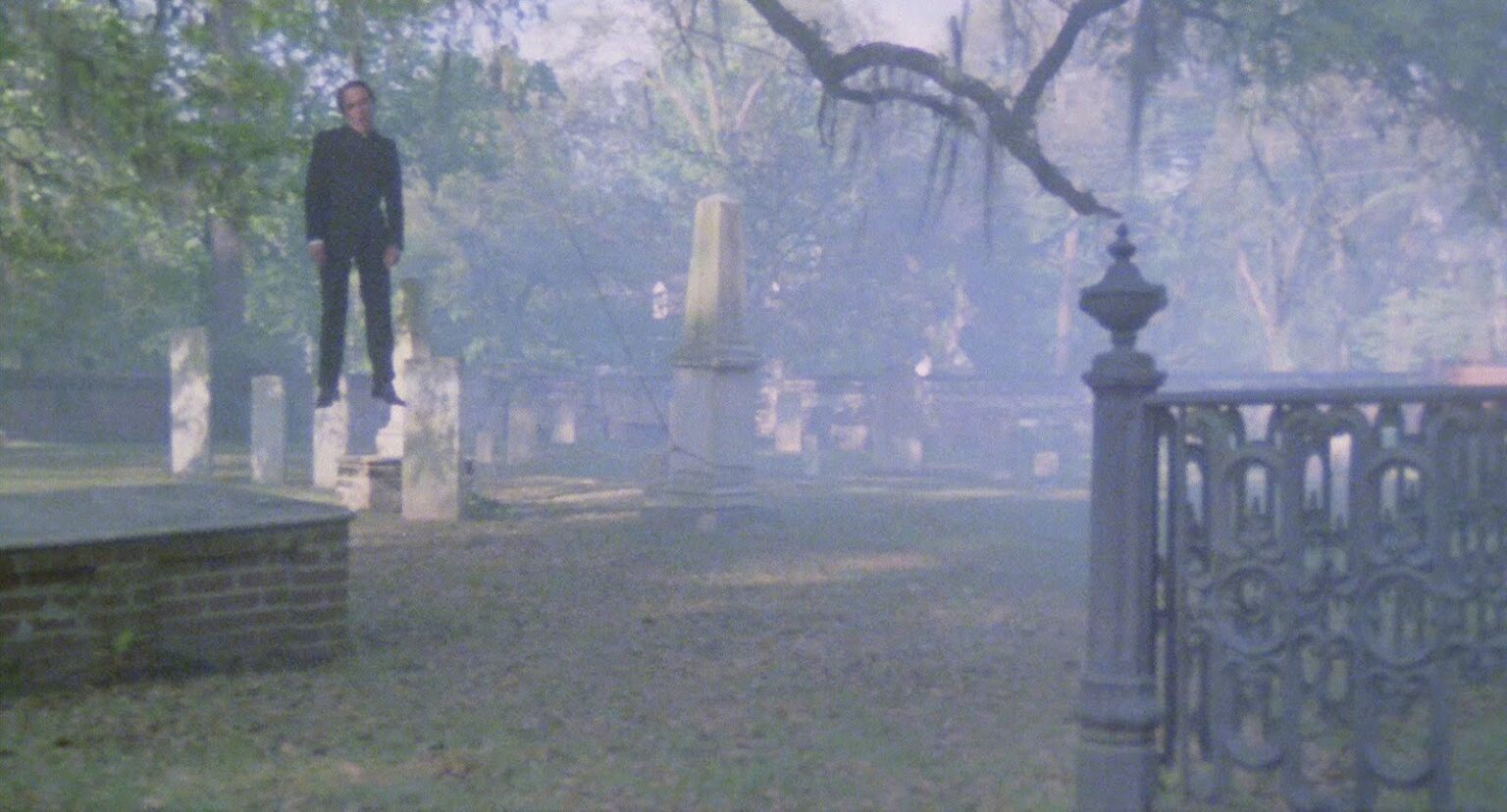
City of the Living Dead (1980)
Start here, right in the middle of things, and just how Fulci likes it.
A priest has hanged himself in a cemetery in Dunwich (a familiar name to Lovecraft readers), a fictional New England town that feels more like a place that exists only to be damned rather than a place in Massachusetts, and that act rips open a gate to hell. And that’s it, that’s the premise. The movie doesn’t spend much time convincing you this is possible; it just begins and the world has already gone wrong.
What comes after isn’t really a narrative but more an atmosphere with the occasional murder. A psychic and a journalist try to close the gate before All Saints Day. They drive through fog and wander about a town that has the specific quality of a place which knows it’s dying. People here die in ways that are genuinely upsetting, and not because of any pyrotechnics, but because Fulci holds the camera right there without cutting away. He makes you stay in the room with it.
There is a logic problem or two in the movie, and a continuity issue. There’s a subplot that wanders off and never quite returns. But none of that matters. What matters is how it makes you feel. When you watch City of the Living Dead, you feel as though you’re standing outside on a night when the temperature has dropped ten degrees and something smells wrong but you don’t know what it is. Then you go back inside and that feeling doesn’t leave.
I’m choosing this as your entry point because I think it’s Fulci at his most essential, before the budgets got smaller and the scripts got thinner. And also, this is where you’ll immediately know if this is for you.
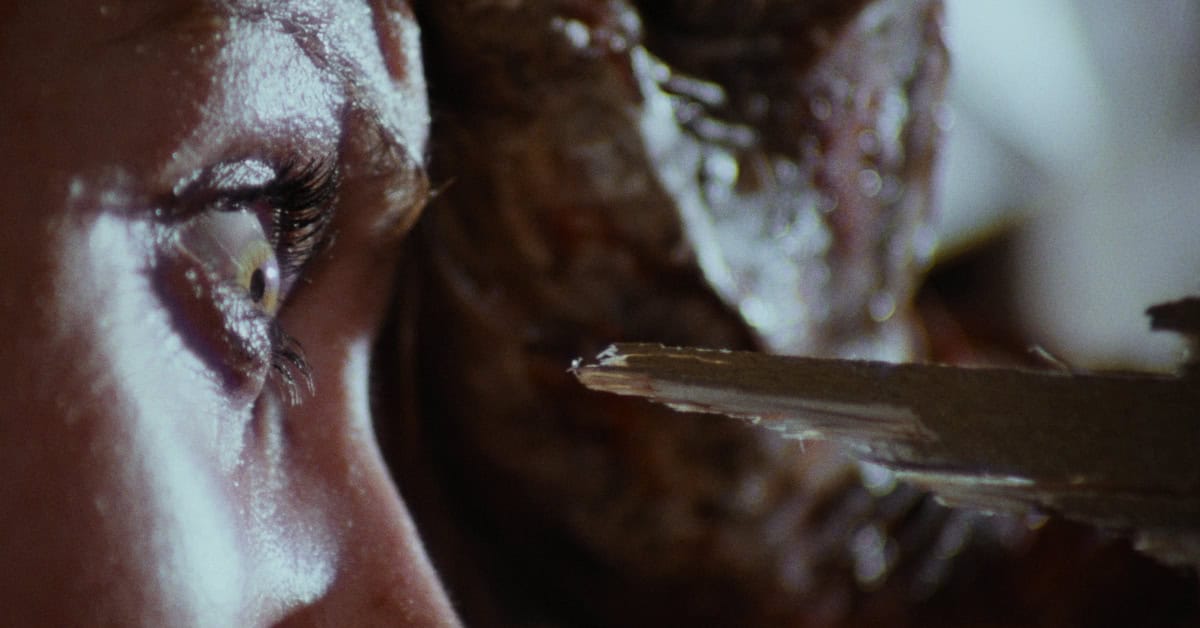
Zombie Flesh Eaters (1979)
If you think of City of the Living Dead as Fulci being the poet of dread, then Zombie Flash Eaters is Fulci as the showman. This is the one you watch with people, and the one you know from the poster on somebody’s wall.
The setup is ridiculous in the best possible way: we have a boat drifting into New York Harbour, there is no crew and one zombie. Then suddenly we’re in the Caribbean, where a woman is looking for her father, missing on an island where something has gone deeply wrong with the dead. It’s pretty much Jaws by the way of Voodoo mythology, and by way of a man who absolutely committed to the bit.
And then comes the scene. The one that, even if you haven’t seen this movie you’ve heard about. There is a zombie and a shark. Underwater. And they’re fighting. I’ll say nothing more, other than it was filmed with a real shark, the zombie was a local shark trainer wearing a suit who had worked with that particular animal, and the result is one of the more insane sequences in the history of a genre which isn’t exactly lacking in insane sequences.
Zombie Flesh Eaters, I think, is where Fulci found his international audience, he was riding the coattrails of George Romero while doing something honestly different. He was sun-drenched and sweaty, while Romero was satirical and cold, operatic while Romero was deadpan. I think it’s the most accessible movie in his catalogue, and it’s also where you see his eye for a frame. No matter what anyone tells you, that man could compose a frame.
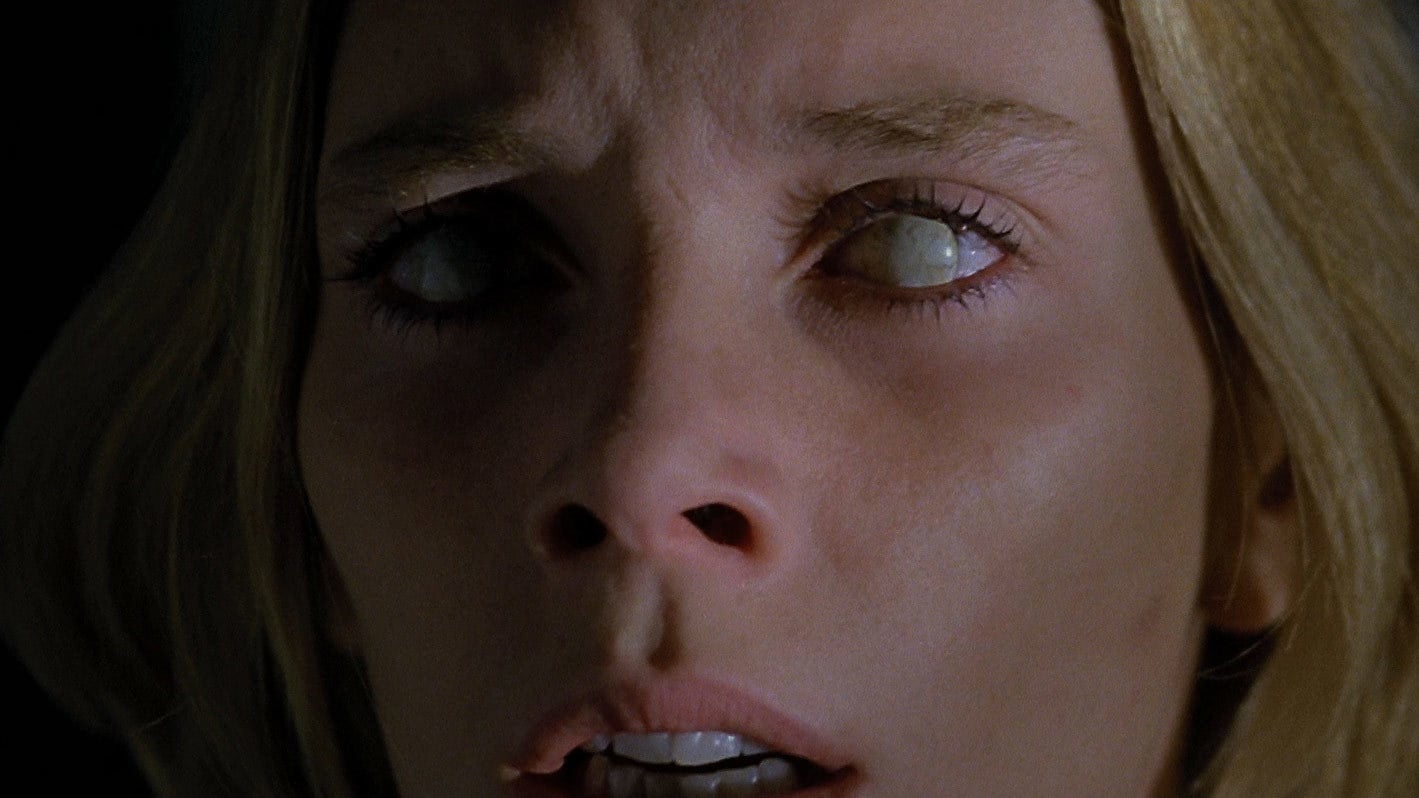
The Beyond (1981)
This is his masterpiece. Do not start with this; really, you need the previous two to calibrate your expectations, but you have to understand that everything Fulci was building towards lands right here.
A woman inherits a hotel in Louisiana which is built over one of the seven gates of hell. And that’s a sentence which tells you everything and nothing. The movie begins in 1927, with a sepia-toned prologue that feels like a nightmare someone else left in your brain. Then we jump to the present day with the hotel being renovated, things are being opened that should not be opened, and the movie begins its slow and dreamlike unwinding towards an ending which is still one of the best final images in horror cinema.
The film doesn’t care about plot; on that I have to be totally clear. Characters appear then disappear, motivations are gestural, cause and effect are more suggestions instead of rules. What Fulci is doing, and what he is always doing, is creating a feeling. A sustained and building sense that our world has thin places and in those thin places, something enormous and patient is waiting.
The movie has a poem in it, recited by a blind woman who may or may not be something more than human. The poem is about the beyond, the threshold and about what is waiting. It shouldn’t work, and yet it completely does.
Ennio Morricone didn’t score this one; it was Fabio Frizzi and he composed some of the most truly unsettling music in Italian horror. The score alone will find you again in a room weeks later and do something awful to your mood.
Anything to Avoid?
Well, yes, not everything Fulci made is worth your time. The New York Ripper from 1982 is mean in a way which lacks the poetry of his earlier and better work, it’s more exploitation than expression. His early genre work is for completists only, and some of his later movies were made under circumstances that really left their mark.
But don’t let that stop you from eventually getting around to Don’t Torture a Duckling, which is something else completely. It’s a murder mystery set in rural Southern Italy which I think is both his most humane work and also one of his most savage. It’s also the one in which you’ll see he was capable of much more than the gore merchants wanted to credit him with.
The thing about Fucli is that the critics who dismissed him weren’t always wrong on the facts. He did make movies quickly, and sometimes sacrificed coherence for impact. He was also operating in a commercial ecosystem which did not exactly reward subtlety.
Closing thoughts
What they missed was this: subtlety was never the point. Fulci was working in the medium of nightmares and nightmares are not subtle, they’re architectural. They’re about the certain texture of a certain dread; in the way a room can feel wrong, or how a face can suddenly be not quite a face, and in the way a sound can mean something horrific without you being able to understand why.
He understood something about horror that a lot of other, technically accomplished directors don’t: fear lives in the body before it lives in the mind. You can build fear with duration and light and a reluctance to cut away. That given the right conditions, an audience will frighten themselves.
So go to Dunwich. Stay at that Louisiana hotel. Stand at the edge of the blue waters of the Caribbean and see what will emerge from the deep.
You were warned. And you’re going anyway.
That’s exactly right.

Author
Adam Page is a freelance writer, specialising in film and literature with essays and opinion pieces. He has a particular love for all things horror-related, being published in HorrorFam, FilmEast, MovieMarker among others. He is an Undergraduate, studying English Literature and Language, and enjoys taking movies apart, discovering the themes and techniques used to make cinema the incredible medium it is. If he isn’t writing an essay, he is usually found rewatching a movie, notebook in hand and annoying anyone who is sitting close by. Feel free to follow him on Instagram and BlueSky.
Giallo is a subgenre of horror-thriller films that started in Italy, characterized by its unique blend of murder mysteries, psychological horror, eroticism, and stylized violence….
A cult film is a movie that builds a devoted following without achieving mainstream success or widespread critical praise at the time of its release. These films are…
Giallo is a subgenre of horror-thriller films that started in Italy, characterized by its unique blend of murder mysteries, psychological horror, eroticism, and stylized violence….
In the 90s, fear was defined by excessive gore, dark settings, and monsters in masks that chased their often-adolescent victims around their white-picket lawns. American cinema…
Cinema as an art form, has the unique ability to challenge societal norms, push the boundaries of storytelling and provoke intense emotions. One of the most striking…
B movies have long been a staple of the film industry, existing in the shadows of their higher-budget counterparts yet cultivating their own unique legacy. These films…