
the devil wears prada 2 review
film by David Frankel (2026)
Twenty years is a long time to wait for a sequel. The Devil Wears Prada (2006) became a generational touchstone, a film about ambition, identity and killer heels that people still quote at dinner tables today. Its follow-up, directed once again by David Frankel and based on Lauren Weisberger’s work, arrives with the weight of all that love on its shoulders. The question isn’t just whether it’s a good film. It’s whether it deserves to exist at all. The short answer: just about, yes.
Review by: Shelsey Wauters | Filed Under: Film Reviews
May 25, 2026
The numbers alone tell you the appetite was there. The film pulled in $156.6 million internationally on its opening weekend against a $100 million budget, making it the highest-grossing debut of Meryl Streep’s career and the second biggest opener for a worldwide US-studio film in recent memory. A 76% female audience showed up and showed out. Whatever the critics say, people wanted this.
Frankel reunites with producer Wendy Finerman and a cast that includes Anne Hathaway, Emily Blunt and Stanley Tucci alongside the inimitable Streep. The story picks up in the same world as the first, the cutthroat, high-fashion universe of Runway magazine, but the world around it has shifted. The characters haven’t changed much, and neither has the type of storyline, but the influences have: traditional media is crumbling, the industry is evolving, and everyone is getting older in a world that changes every single day. Funnily enough, the film is set not in a Prada universe but a Dior one, a small detail that somehow feels significant.
At its best, the film handles those themes with a quiet confidence. The way it shines a light on the loss of traditional media, and what it feels like to age in an industry obsessed with the new, is genuinely affecting. The camera work is also sharper than in the original, the angles are more considered, the fashion sequences more cinematic.
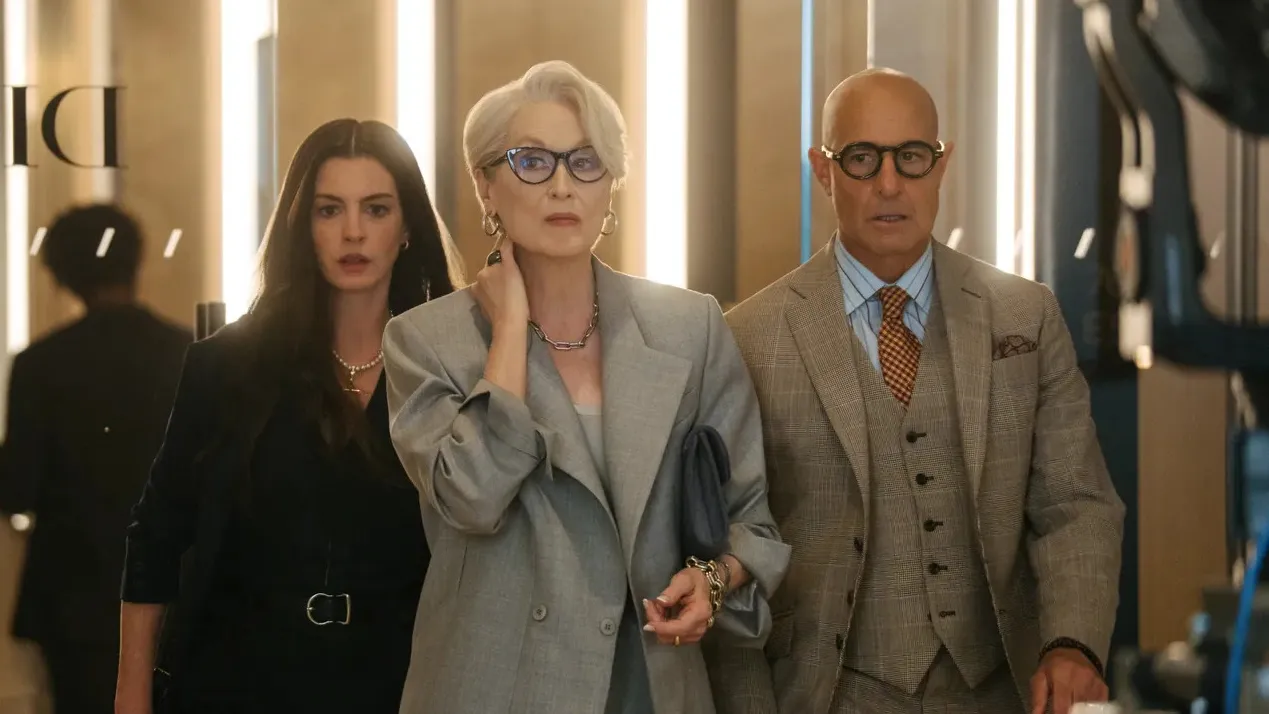
And yet. The overall feel of the film is surprisingly flat. The characters are more difficult to bond with, with the notable exception of Miranda Priestly, who remains magnetic whenever Streep is on screen. The humour doesn’t land with the same sting as the original, and the punchlines feel defused before they arrive. A woman sitting in the row behind me at my screening put it plainly: “A movie I would put on if I was cleaning, or when I don’t have anything to watch.” Harsh, but not entirely unfair.
There are movies that prioritise acting over cinematography, and those that prioritise visual spectacle over performance. This one does neither fully, it feels as though the focus was simply on portraying daily life as accurately as possible, leaving both elements somewhat underdeveloped. The soundtrack, at least, picks up some of the slack.
I’d be remiss not to mention the marketing campaign, which was genuinely brilliant. Watching the cast show up at fashion shows, and seeing Meryl Streep cover Vogue alongside editor-in-chief Anna Wintour, created a cultural moment. The campaign may have done more heavy lifting than the script.
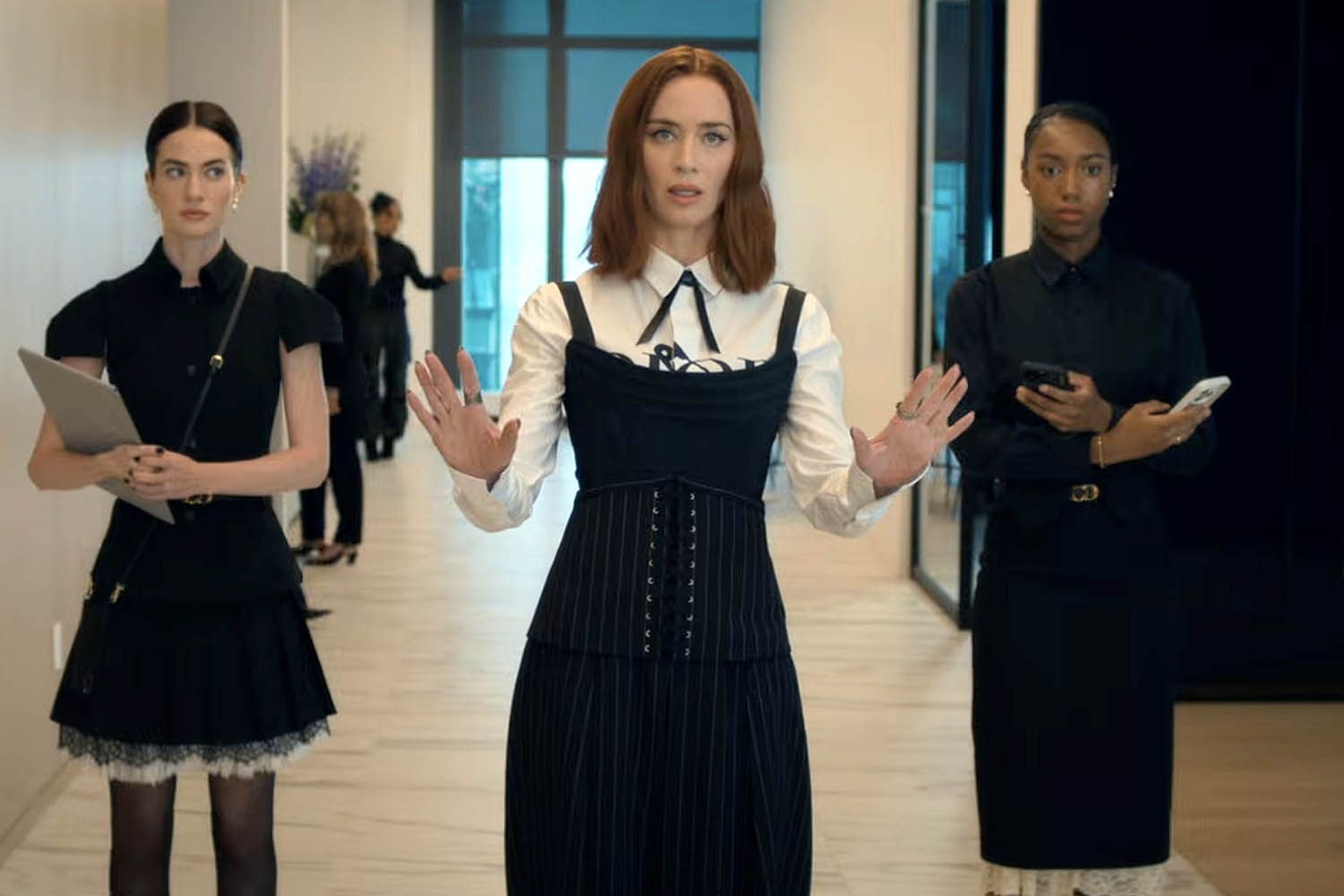
Which brings me to nostalgia, arguably the film’s most powerful co-star. This is one of the first major sequels made specifically for a generation that doesn’t yet have many films to look back on with that warm, aching fondness. Its predictability, which might read as a flaw, could very well become its greatest asset: this will be a comfort film for a lot of people, and perhaps for the next generation too.
I saw this in a cinema where three-quarters of the seats were filled, with people who had dressed up for the occasion. That alone tells you something. Nostalgia isn’t just about the film, it’s about how you feel in the moment of watching it, and everything around that feeling becomes part of the memory. As The Creative Screenwriting website put it: “Nostalgia is an intimate dialogue between what was and what is.”
Disney’s live-action The Lion King is a useful comparison here. Critics were lukewarm at best, yet it crossed $1 billion globally. Nostalgia will get audiences into seats and, more importantly, into a generous frame of mind. It worked for that film, and it’s working for this one, which currently sits at $233.6 million worldwide after being knocked into second place by the Michael Jackson biopic, now at $441.2 million.
The Devil Wears Prada 2 is a good follow-up on the first one. The characters are harder to love, the laughs are rarer, and the script doesn’t quite live up to the legacy it’s carrying. But it’s not trying to be a masterpiece, it’s trying to be a warm, stylish, and quietly thoughtful continuation of a story people genuinely care about. On those terms, it mostly succeeds. Slip-on your best outfit, check your expectations, and enjoy it for what it is.

Author
Reviewed by Shelsey Wauters, a Belgian international journalism student with a passion for film that started at an age where her watching Rocky Balboa raised more than a couple of eyebrows. She has since learned that shouting her opinions at the screen is less effective than writing them down. You can follow her on Letterboxd.
In the near future where emotions have become a threat, Gabrielle finally decides to purify her DNA in a machine that will immerse her in her past lives and rid her…
Just out of jail, crumpled English archaeologist Arthur reconnects with his wayward crew of tombaroli accomplices – a happy-go-lucky collective of itinerant…

Miso lives from day to day by housekeeping. Cigarettes and whiskey are the two things that get her through the day. As cigarette prices and rent start to rise…
Cinematography is the art and craft of capturing visual images for film or digital media. It involves the use of cameras, lighting, composition, and movement to tell…

Film production is the process of creating a film from its initial concept to the final product. It involves numerous stages, each requiring a collaboration of talents, skills, and resources. The…
The studio system was a dominant force in Hollywood from the 1920s to the 1950s. It was characterized by a few major studios controlling all aspects of film production…