
how psychoanalysis shaped surrealist cinema
Something that is perhaps never really brought up about Sigmund Freud is that he never made a movie. Never held a camera, and probably would have hated the popcorn. But somewhere between his Vienna office and the darkened theatres of interwar Paris, his ideas slid off the page and onto the screen like a fever dream you can’t shake off after waking.
Written by: Adam Page | Filed Under: Film Blog
The Unconscious
Becomes Visible
Cinema was young and hungry. Psychoanalysis was young and hungry. The two found each other in the way two worse for wear people find each other at a party; an immediate and dangerous recognition.
Before Freud, there was no visual grammar for the interior life. A nightmare could be described in prose, or a monster could be painted. But you couldn’t show the mechanism, that leaking seam between what the mind knows and what it refuses to know. It turns out, film could do this.
The Surrealists knew this immediately. André Breton wrote the Surrealist Manifesto in 1924 and had trained in a neurological ward during the First World War. Working with shell-shocked soldiers and men whose minds had shattered under the weight of horrific things. He had read Freud closely; the Interpretation of Dreams, essays on the uncanny and papers on free association. What he took from it all was basically that the real action was happening somewhere you can’t directly see. A way had to be found to trick the eye.

Dream Logic: Buñuel and Dalí
And so enter Luis Buñuel and Salvador Dalí. 1929. “Un Chien Andalou”. Twenty-one minutes of specifically choreographed wrongness and it changed what cinema was allowed to be.
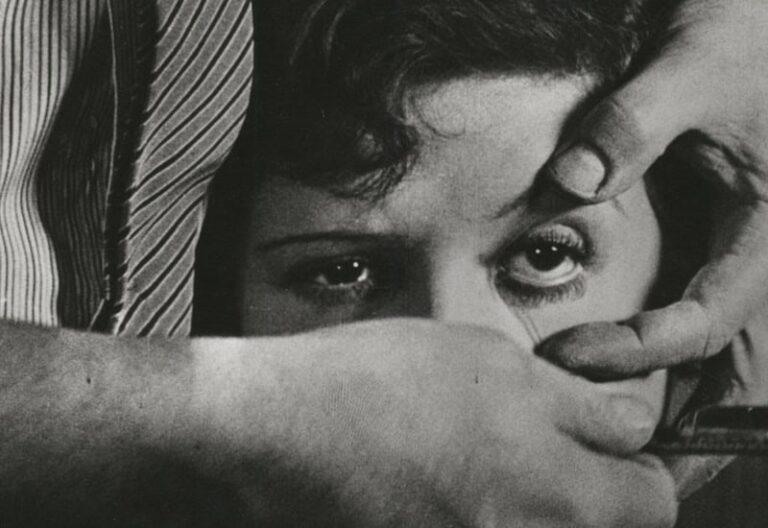
Still the most famous image of a razor blade slicing an eye is not shock for the sake of shock, although God knows it works as that too. Instead, it is a programmatic statement. Telling us: You will see differently now.
The eye being sliced is the complacency of the audience. What follows that operates on dream-logic: grand pianos loaded with dead donkeys and priests being dragged by a man. Ants burst from a hole in the hand. A woman pokes at a dismembered hand with a stick. Time skips and causality collapses.
Later, Buñuel would claim they had a simple rule in writing it; no image could be explained with rational association. If either of them was able to explain why something was there, then it didn’t belong. It’s Freudian free association weaponised to an editorial principal. They weren’t illustrating dreams, they were building the grammar of dreaming.
Freud’s Dream
Mechanisms on Screen
Sigmund Freud found several mechanisms in which the unconscious hides its content in dreams, these are:
- Condensation: multiple ideas pressed into a single image.
- Displacement: where emotional weight is shifted from the actual object to something neutral or strange.
- Symbolization: abstract wishes made visible.
- Secondary revision: the mind attempts to force a thin narrative coherence onto material that resists it.
Look at any sequence of Dalí with this in mind and the camera work becomes almost a diagram.
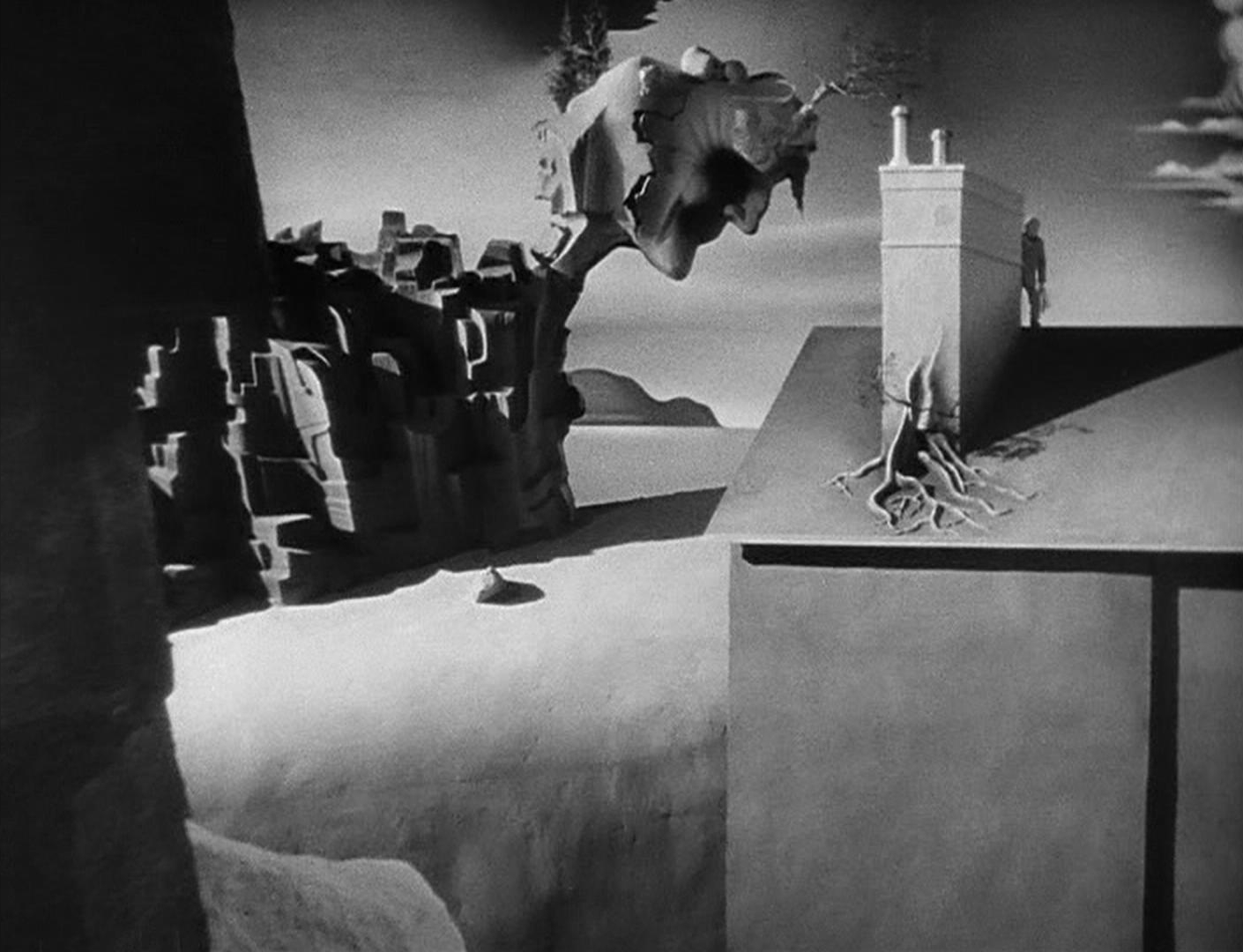
For Alfred Hitchcock’s “Spellbound” (1945) Dalí was hired specifically to design the lengthy dream sequence. The ensuing result is so consciously Freudian, it’s almost didactic. There are melting eyes, faceless playing card figures, a man with scissors chases another across an impossible roof. Ever the craftsman, Hitchcock reportedly found Dalí’s approach frustratingly literal. He felt the dreams should feel real, having the texture of memory instead of the gaze of theatrical fantasy.
Yet Dalí’s sequence works exactly because of its flat and over-lit wrongness. The spaces are too sharp and the shadows fall wrong. The logic very nearly holds, then doesn’t. It is just how we feel twenty minutes after we wake up when trying to reconstruct something terrible.
It is condensation made visible. The faceless figures, the scissors and strange roof-lines, they are all doing the work of various anxieties simultaneously. The castration fear, the fear of the blank paternal authority figure, fear of exposure, all running through the same image like rivers meeting in a single delta.
The Uncanny
and the Familiar
Freud’s writing on Das Unheimliche, the uncanny, is maybe his most cinematically useful idea, and one the Surrealists exploited with the most precision.
He described the uncanny as not a simple fear of the strange or foreign, but something more specific and disturbing: the horror of the familiar made strange. Or the strange revealed as familiar. That doll which seems alive. The double walking around with your face. The house you recognise yet have never been in. Freud argued it arose when something that was intimate and known was repressed, then surfaces in a distorted form.
“Blood of a Poet” (1930) and “Orpheus” (1950) from Jean Cocteau are essentially extended meditations on this quality. We see mirrors used as portals. The underworld as a film set with literal machinery visible at the edges. Death as a dark woman wearing a long coat arriving in a black Rolls-Royce. These images are uncanny not because they are horrific, but because they are almost normal. A man walks through a mirror as though it’s water. A poet sketches a mouth which attaches itself to his hand and speaks. The sheer ordinariness of these violations is exactly the point.
Cocteau knew what the psychoanalysts were saying. That the really disturbing thing isn’t the monster under the bed. It’s the moment when we realise the bedroom ceiling has always looked a little like a face, and now we can’t unsee it.
The Death Drive
and Repetition
Then there is the death drive. Thanatos, Freud’s late, controversial, and honestly strange idea that alongside Eros, the life drive, there exists an equal and opposite pull toward dissolution, repetition, and a return to an inorganic state.
This idea scandalised many of even his own followers. It seemed too philosophical, a little too much like metaphysics dressed in clinical clothes. But the Surrealists, coming of age surrounded by industrial-scale death and watching Europe rip itself to pieces twice in 30 years, found it totally legible.
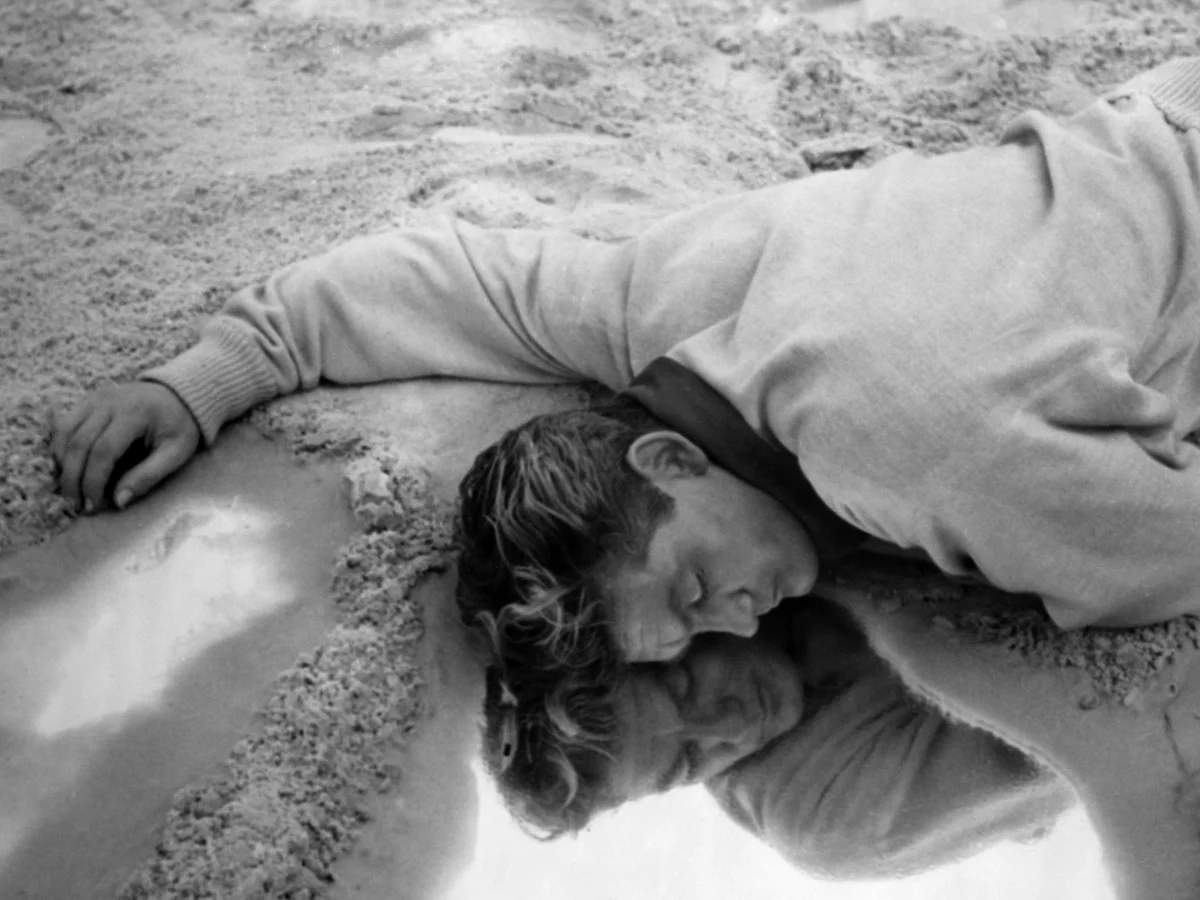
Look at the endings of Buñuel’s movies. Not just “Un Chien Andalou,” which ends with two lovers buried to the waist in sand as insects consume them in the sunlight, a last image of erotic death landing like a brick, but all through his long career. In “Viridiana” (1960) idealism and charity are ground down until they become indistinguishable from their opposites. Or especially “The Exterminating Angel” (1962), where a group of dinner-party guests find it mysteriously impossible to leave a room. They re-enact the same failures and gestures in an endless loop. They can’t name the compulsion or break it. The movie ends without resolution because the death drive doesn’t resolve. It repeats.
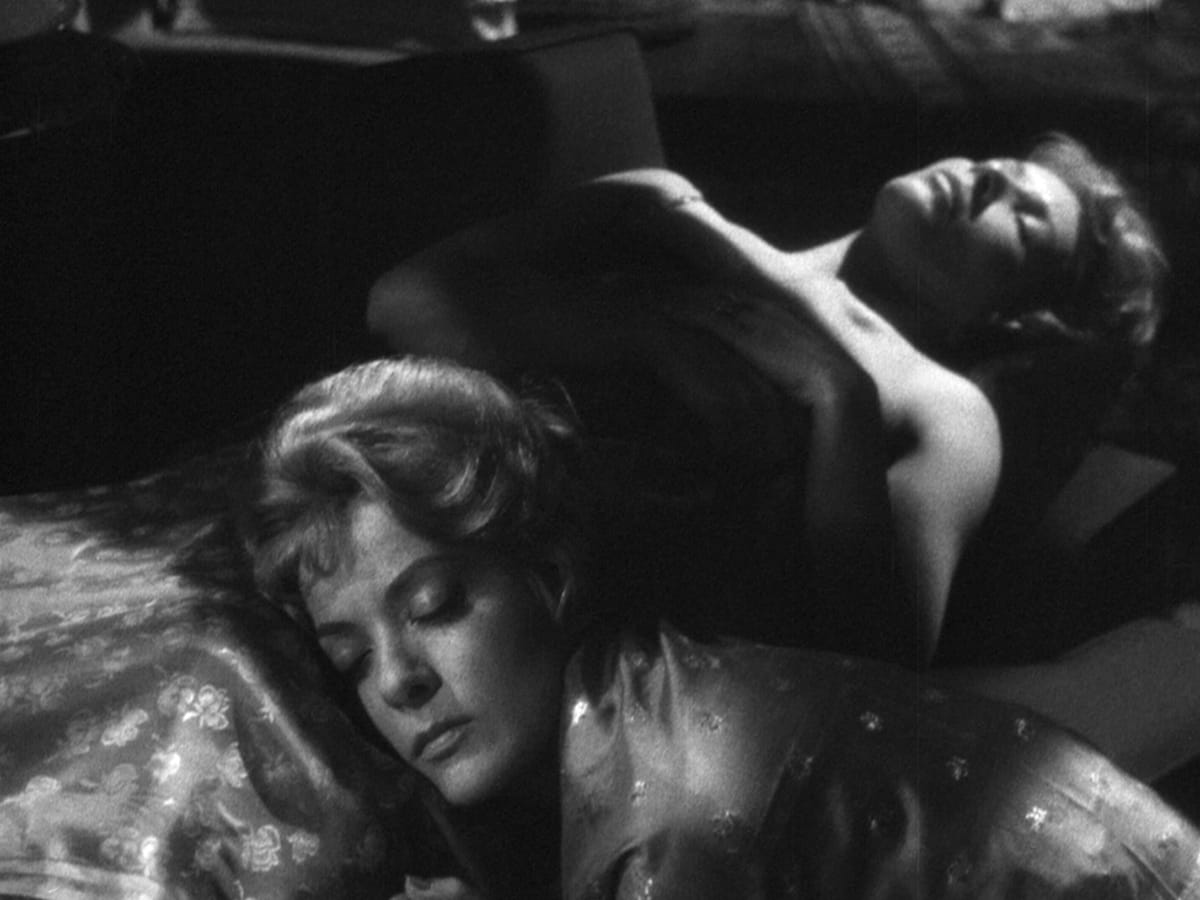
Repetition compulsion, that need to return to a traumatic moment, to restage it in the hope of mastering it, is Buñuel’s main structural tool. His characters desire things they can’t name, and act on desires they don’t understand. They are moved by something which is underneath their intentions. And the camera watches this happen with the flat patience of a physician who has heard this story before.
Cinema as the Language
of the Mind
What the page could never quite do, and canvas could only partially manage, is unfold in time like cinema. It can show you the process of changing, the instant of slippage and the precise second when one thing becomes another. The cut, the most violent and fundamental of cinema techniques, is in itself a type of repression. Something exists, then suddenly something else exists in its place and the mind, in its desperation for continuity, papers over the gap.
Along with the psychoanalysts, the Surrealists knew this. The cut wasn’t neutral. Every edit was a small death, a small dream. When they were strung together, they could approximate the actual texture of the movement of the unconscious, sideways, associatively, towards ends which feel inevitable in retrospect, but could never have been predicted in advance.
Freud may not have ever made a movie, but he described one. And some moviemakers, brilliant, restless, and a little unhinged, knew that the camera was the instrument he had been waiting for, one which was finally capable of showing what no couch could capture:
The mind, when it thinks nobody is watching.
Author
Adam Page is a freelance writer, specialising in film and literature with essays and opinion pieces. He has a particular love for all things horror-related, being published in HorrorFam, FilmEast, MovieMarker among others. He is an Undergraduate, studying English Literature and Language, and enjoys taking movies apart, discovering the themes and techniques used to make cinema the incredible medium it is. If he isn’t writing an essay, he is usually found rewatching a movie, notebook in hand and annoying anyone who is sitting close by. Feel free to follow him on Instagram and BlueSky.
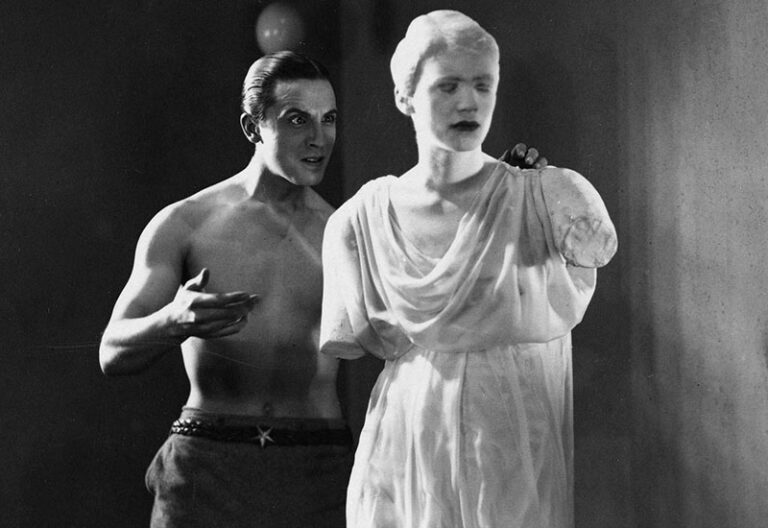
Surrealist cinema originated in the 1920s as an extension of the broader Surrealist art movement, which itself grew out of the Dada movement that arose during and after World…
Film theory is the academic discipline that explores the nature, essence, and impact of cinema, questioning their narrative structures, cultural contexts, and psychological…
Experimental film, referred to as avantgarde cinema, is a genre that defies traditional storytelling and filmmaking techniques. It explores the boundaries of the medium, prioritizing…
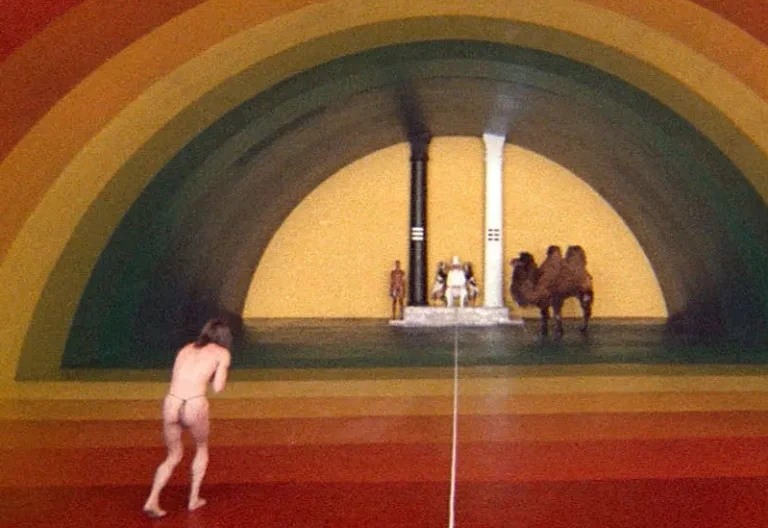
The scandal of the 1973 Cannes Festival, director Jodorowsky’s flood of sacrilegious imagery and existential symbolism in The Holy Mountain is a spiritual quest for…
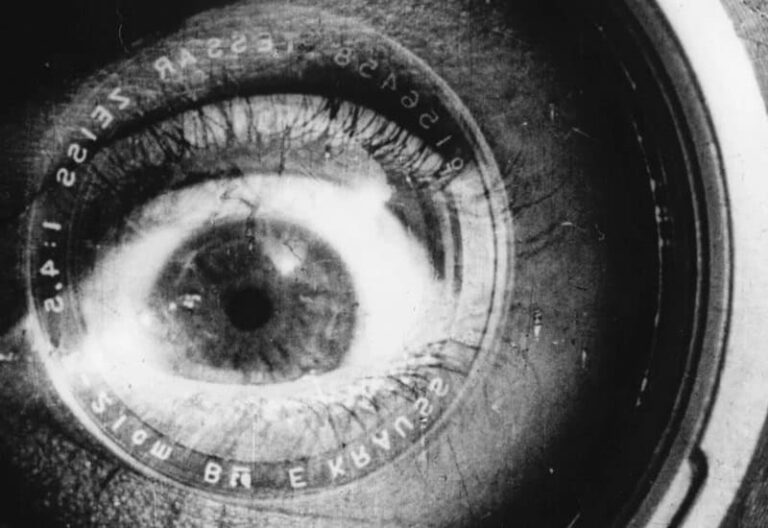
Kino-Eye (Cine-Eye) was a pioneering film technique founded by Soviet filmmaker Dziga Vertov in the early 1920s. It emerged as part of a larger avant-garde movement in…
Absurdist film is a genre that stems from the philosophical concept of absurdism, which suggests that life is inherently without meaning, purpose, or order, and that human…