
the legacy of hammer horror
In the middle of the twentieth century, when American studios dominated and British cinema leaned toward realism, Hammer Productions revived the Gothic past, giving horror a new visual language that was lush, provocative, and unmistakably British. Its films carried the weight of literary tradition while embracing the freedoms of postwar cinema. For over two decades, Hammer Productions defined the look and tone of Gothic horror on screen.
Published by: CinemaWaves Team | Filed Under: Film Blog
Early History of Hammer Film Productions
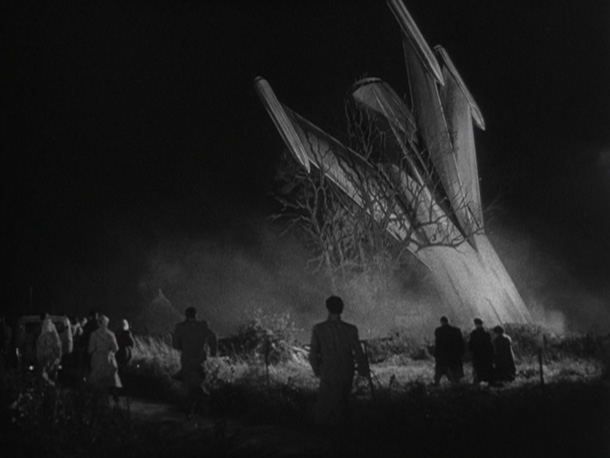
Hammer Film Productions was founded in the 1934, but its early decades were marked by uncertainty rather than identity. The studio produced a range of modest thrillers, crime dramas, and comedies, operating on the margins of the British film industry. It survived through efficiency and adaptability, not prestige.
During the 1940s and early 1950s, Hammer often worked in partnership with larger distributors, producing second features and tightly budgeted genre films designed to fill cinema programs.
Titles such as “The Quatermass Xperiment” (1955) hinted at the studio’s growing interest in darker material. These productions revealed a real strength: Hammer understood how to generate atmosphere and tension within strict financial limits. That would later become one of their greatest advantages.
After World War II, British cinema leaned heavily toward realism, often focusing on social issues. Horror, once popular in the 1930s, had faded into the background. Hammer recognized an opportunity in that absence. Instead of following the dominant trend, the studio turned toward Gothic literature and the dramatic potential of classic monsters. This decision would redefine them.
The Golden Age:
1957 to the Late 1960s
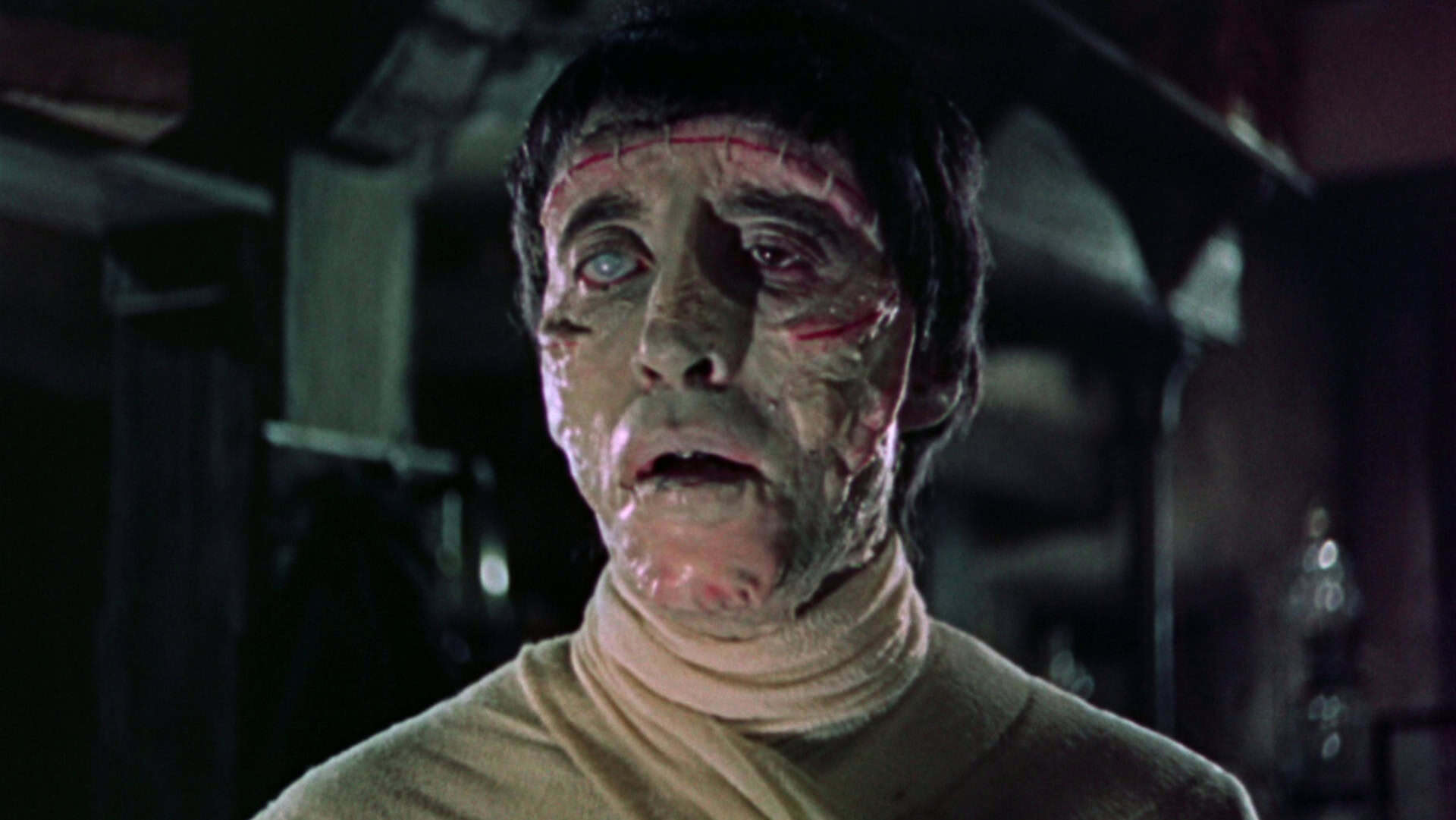
The transformation began with “The Curse of Frankenstein” in 1957. Directed by Terence Fisher and starring Peter Cushing, the film startled audiences with its bold use of color and graphic intensity. The success of the film established Hammer as a serious force in genre cinema.
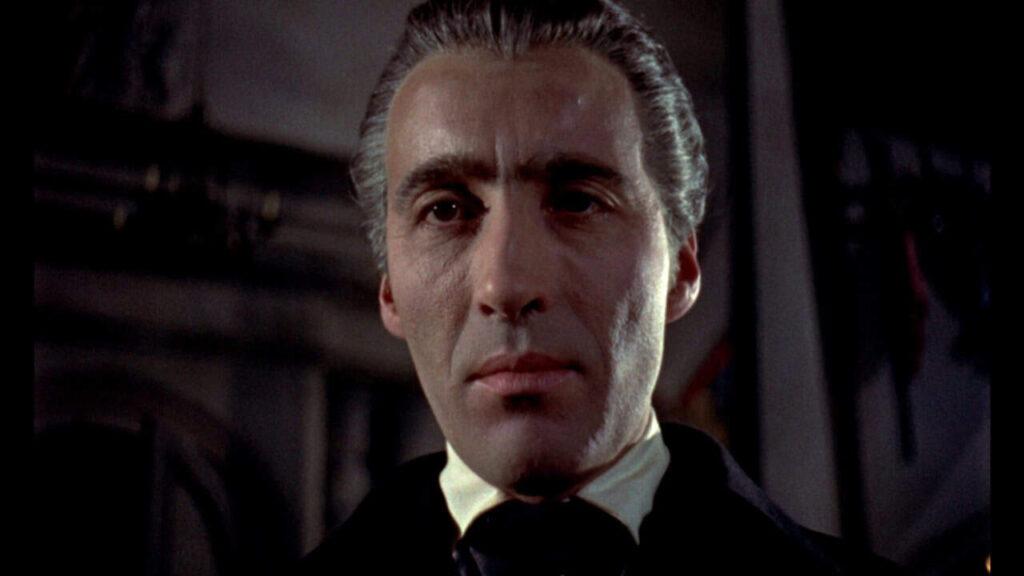
The following year of 1958, “Dracula” cemented that reputation. Christopher Lee’s portrayal of the Count introduced a new physicality and sensual threat to the character. These two films set the template for what became Hammer’s golden age.
Throughout the late 1950s and 1960s, the studio produced a steady stream of Gothic adaptations, including new versions of Frankenstein, Dracula, and The Mummy. Actors Peter Cushing and Christopher Lee became central figures as their collaborations gave the films emotional depth and consistency.
Working with limited budgets, Hammer relied on atmosphere rather than scale. Sets were reused and redesigned, yet careful lighting and art direction made them feel expansive. The studio constructed a coherent Gothic universe of castles, laboratories, graveyards, and candlelit interiors. This period defined the Hammer style and secured its international reputation.
Transition and Experimentation: Late 1960s to 1970s
As the cultural climate shifted in the late 1960s, Hammer began to experimenting. Audience tastes were changing, and horror cinema globally was becoming more explicit and psychologically intense. In response, Hammer leaned further into themes of sexuality and occultism.
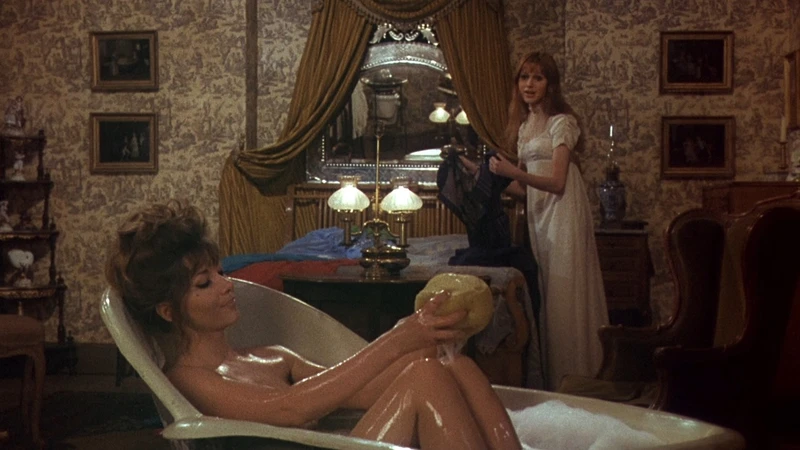
Films such as “The Devil Rides Out” explored satanic paranoia, reflecting contemporary anxieties. “The Vampire Lovers” introduced more overt erotic elements, signaling an attempt to adapt to the loosening censorship standards of the era.
Despite creative efforts, the studio struggled to compete with the emerging wave of modern horror that favored contemporary settings and harsher realism.
By the late 1970s, Hammer’s production output slowed dramatically. Financial difficulties and changing market conditions made it increasingly difficult to sustain large scale period horror. The rise of American horror films shifted audience expectations. Hammer’s candlelit castles and aristocratic villains felt distant from the anxieties of a new generation.
The company gradually ceased regular film production, and for a period its name survived largely through television projects.
Revival in the Contemporary Era
In the early twenty first century, the Hammer name was revived under new ownership. Rather than simply imitating its earlier successes, the contemporary iteration sought to reconnect with the studio’s Gothic sensibility while adapting to modern cinematic language.
Films such as “The Woman in Black” (2012) embraced atmosphere and period setting, recalling the studio’s traditional strengths while employing contemporary pacing and production scale. The revival did not attempt to recreate the exact tone of the 1960s films, but it acknowledged their legacy through careful attention to mood and setting.
Defining Characteristics
of Hammer Horror
Hammer Production style is recognizable almost immediately. The use of saturated color, particularly vivid reds, transformed the visual language of Gothic cinema. Atmosphere is central. Candlelight flickers across stone corridors, mist drifts through graveyards, and heavy fabrics frame carefully composed interiors. Production designer Bernard Robinson played a crucial role in shaping these environments, stretching limited budgets into convincing spaces.
Another defining trait is the tension between repression and desire. As the 1960s progressed, Hammer’s films explored sexuality more openly. Female characters were often central to narratives of temptation and transformation, reflecting wider cultural shifts.
The studio treated horror as tragedy as much as spectacle. Its monsters were shaped by obsession, ambition, and fate. This seriousness gave the films emotional weight beneath their stylized surfaces.
Essential Hammer Horror Films
“The Curse of Frankenstein” (1957) by Terence Fisher: The film that launched Hammer’s Gothic revival and reintroduced Frankenstein to postwar audiences. Peter Cushing’s Baron is cold, intelligent, and morally detached, shifting the focus from the creature to the creator. Its vivid color cinematography and graphic detail distinguished it sharply from earlier adaptations and announced a new visual era for horror cinema.
“Dracula” (1958) by Terence Fisher: Christopher Lee’s portrayal of Dracula transformed the vampire into a figure of physical dominance and sensuality. With minimal dialogue and intense screen presence, Lee redefined the character for modern audiences. The film’s pacing and emphasis on erotic tension made it one of the most influential vampire films ever made.
“The Mummy” (1959) by Terence Fisher: Reuniting Lee and Cushing, this adaptation combines supernatural revenge with romantic melancholy. The Egyptian setting broadens Hammer’s Gothic world while preserving its atmosphere of doom and fatalism.
“The Devil Rides Out” (1968) by Terence Fisher: Departing from classic literary monsters, the film reflects late 1960s anxieties about hidden cults and unseen forces. Its performances and escalating tension demonstrate Hammer’s ability to build dread without relying solely on spectacle.
“The Vampire Lovers” (1970) by Roy Ward Baker: Part of the Karnstein trilogy, this film foregrounds themes of desire and repression. Its portrayal of female sexuality marked a significant shift in Hammer’s approach during a period of changing censorship standards. The atmosphere remains richly Gothic, but the tone signals a studio adapting to a new cultural climate.
Cultural Impact
and Legacy
Hammer horror reshaped the global image of Gothic cinema during its peak in the late 1950s and 1960s, and it continued to evolve into the 1970s as it responded to shifting cultural pressures. It proved that classic monsters were not relics of the past but figures that could be reinterpreted through saturated color, sensual tension, and psychological gravity. Christopher Lee’s Dracula and Peter Cushing’s Baron Frankenstein remain defining portrayals while their performances shaping how these characters are still imagined today.
The studio’s visual language left a lasting impact on later generations of filmmakers drawn to stylized horror and romantic darkness. Theatrical set design, heightened color palettes, and an emphasis on tragic intensity can be traced forward into the work of directors such as Tim Burton and Guillermo del Toro.
Even when horror moved into contemporary settings, the mood Hammer cultivated did not disappear. It lingered as a reference point for filmmakers interested in atmosphere over realism.
Refer to the main page for more educational insights on filmmaking and cinema history.
Giallo is a subgenre of horror-thriller films that started in Italy, characterized by its unique blend of murder mysteries, psychological horror, eroticism, and stylized violence….
The term “Lynchian” has been used to describe a unique blend of the mundane and the bizarre, where eerie undercurrents lie beneath everyday realities. Coined to encapsulate…
Analog horror is a fascinating corner of the horror genre. They do not rely on modern special effects or glossy visuals. Instead, they aim lo-fi aesthetic, unsettling, glitchy…
The Tokyo of Kiyoshi Kurosawa’s “Pulse” is the city at its most melancholy. Everything is enveloped in a grey fog. The sun is afraid to show its face. Brutalist architecture looms over everyone…
Cinema as an art form, has the unique ability to challenge societal norms, push the boundaries of storytelling and provoke intense emotions. One of the most striking…
B movies have long been a staple of the film industry, existing in the shadows of their higher-budget counterparts yet cultivating their own unique legacy. These films…